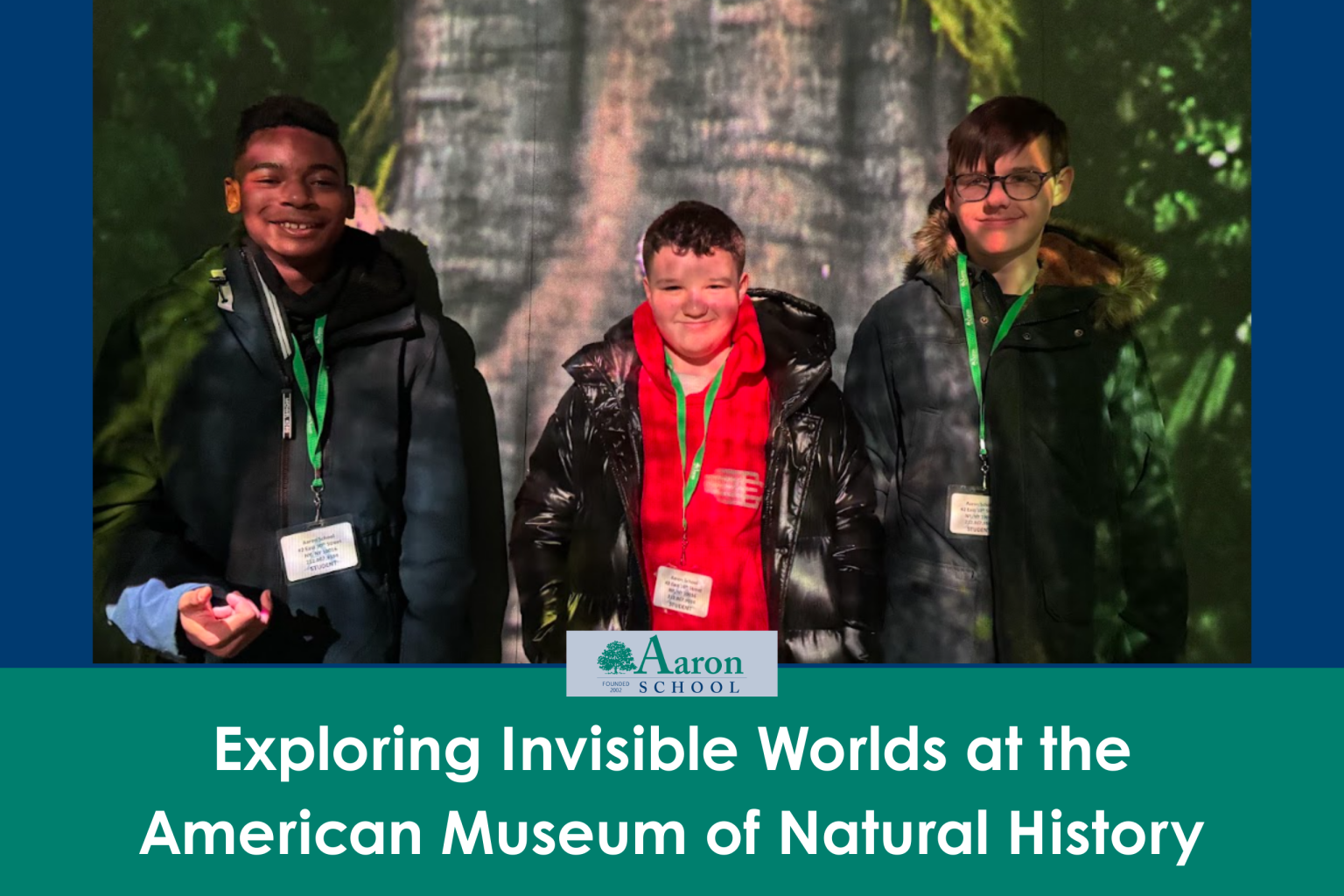
This month, 8th and 9th grade students participated in an engaging field trip to the American Museum of Natural History that extended learning beyond the classroom and into the world around them. The day was filled with exploration, connection to scientific concepts, observation, discussion, and curiosity.
During the visit, students explored the Invisible Worlds exhibit, an immersive and interactive experience that highlights the many ways life on Earth is interconnected. Through dynamic visuals and hands-on elements, students examined how ecosystems, microscopic organisms, and environmental systems rely on one another. This exhibit encouraged students to think critically about relationships in nature and to recognize how even the smallest components play an essential role in maintaining balance within larger systems.
Students also visited the Insectarium, where they observed a wide range of insects up close, from leaf-cutting ants to giant mantises, beetles, and more. As they explored the exhibit, students observed insect adaptations, behaviors, and their importance within ecosystems. Many students were surprised by the complexity and diversity of these organisms, leading to thoughtful questions, group discussion, and increased appreciation for the role insects play in the natural world.
Throughout the trip, students were active observers, asked great questions, made connections to their own experiences, and engaged in collaborative conversations with peers and teachers. These experiences supported skills such as critical thinking, communication, and curiosity, while reinforcing classroom learning in a dynamic and memorable way.
Experiences like this continue to show the value of hands-on learning and real-world exploration. Being part of an interactive setting such as the American Museum of Natural History, students were able to deepen their understanding of various life forms on our planet, while also developing a greater appreciation for the interconnectedness between such life forms.