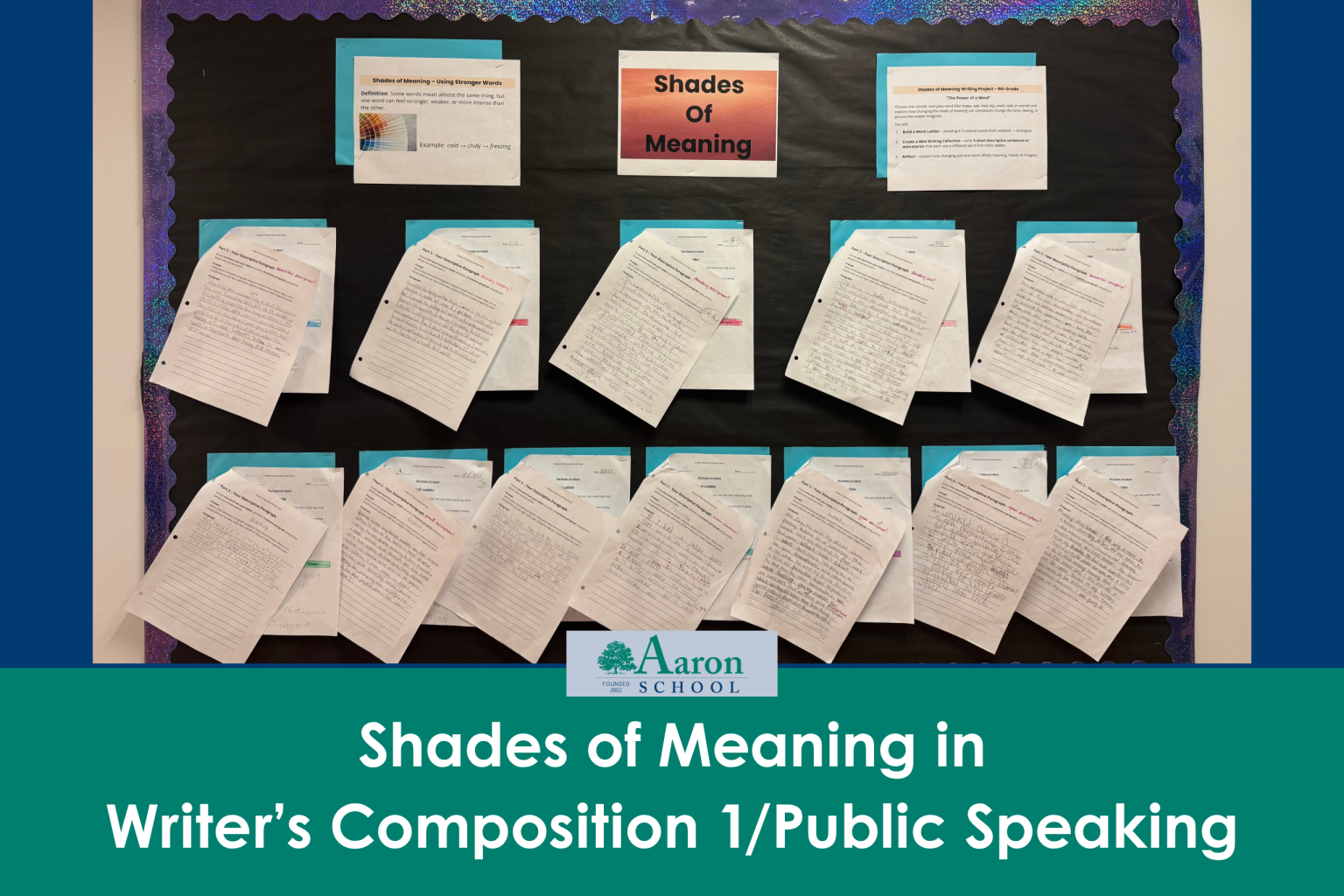
In Writer’s Composition 1/Public Speaking, our 9th grade students recently completed a creative writing project called “The Power of a Word,” where they explored how subtle differences in word choice (known as shades of meaning) can completely change the tone or impact of a piece of writing. This work builds on our ongoing focus on descriptive writing and vocabulary development.
Through class discussions, word-sorting activities, and visual “word ladders,” students learned that not all synonyms carry the same strength or feeling. For instance, mad, angry, furious, and enraged each express different levels of intensity. By experimenting with these shades of meaning, students discovered how the right word can make their writing more precise, expressive, and powerful.
After studying examples together, students applied their understanding in a multi-step writing project. Each student chose one everyday word, such as happy, cold, or scared, and created a “word ladder” showing how the meaning deepens from weakest to strongest. They then wrote short descriptive sentences using each variation of their word, before crafting a final paragraph that showcased their strongest vocabulary and most vivid sensory details. The results were impressive: students’ writing came alive with emotion, tone, and imagery, showing how a single word can transform a simple sentence into something memorable.
This project not only helped students expand their vocabulary but also encouraged them to think like authors and make intentional choices about language to shape the reader’s experience. Their growing awareness of tone and word intensity is already showing up in their descriptive paragraphs and daily writing routines!
Families can continue to support this work at home by talking about language in everyday life. Ask your child: “Can you think of a stronger word?” or “Does that character seem upset or devastated?” These conversations build awareness and curiosity about how words shape communication, both in writing and in the real world.
As our students continue practicing shades of meaning, they’re learning one of the most important lessons of writing: that the power of a message often lies in the precise words we choose.